I saw a beautiful thing today.
Well, actually I heard it before I saw it.
On City Road, out the back of grey, humanless skyscrapers.
A waft of music on the air.
A burly security guard, in grey-blue pants and a shirt, a communication earpiece in his ear, huddled in the fire-escape,
Playing a mouthorgan.
Tuesday, January 30, 2007


Wednesday, January 24, 2007
The myth about beige cardigans

I am a musician. It makes sense for me to teach music, both financially and personally. Financially, I can earn almost twice as much per hour as I can doing most other things. Personally, it is good for me to be engaged with as much music as possible, and to "live" music. It is excellent to have to put my ideas about music into words, to find ways to explain musical concepts that I take for granted. And makes much more sense for me to earn my pennies doing something related to the career that I want to have.
So why have I been so reluctant to earn money by teaching? I realised the other day that I have a lot of resistance to the idea of being a "music teacher". Subconsciously I felt that music teachers are unattractive, lonely, boring people who wear beige cardigans (apologies to all music teachers for this terrible stereotype). I don't know why I had this image in my head, or where it came from. My music teachers have always been very vibrant and lovely people who would never go anywhere near beige!
Maybe I worry that I will become some kind of social outcast if I become a music teacher. Again, I don't know where all this baggage is coming from. Lots of very interesting, fascinating, friendly and sociable people teach in schools so what am I worried about? I'm not going to be some kind of gnome that hides in the music room and doesn't talk to anyone! And anyway, the purpose of working is to do just that - work. If friendships grow out of working relationships well so much the better, but that's not the purpose of working to earn a crust.
So I'm going to teach. I'm going to share the knowledge that I have gained in all the years of university and the life experience I have gained from, well, being alive. I want to inspire others and in turn open myself to inspiration and new inputs. I love music and it's time to share the love and blast any remotely beige ideas out the window!
Friday, January 19, 2007
Drops

I woke up to the beautiful sound of rain on my roof - rain that we haven't had since Christmas. There are big drops, little drips, pattering on the leaves and plants and drumming on the tin roof. I can almost feel the happiness of the plants, soaking it all up into their parched and yellowing stems.
I am reminded of the wonderful Score for a Hole in the Ground, which uses dripping water to create an incredible musical installation. I am completely in love with the concept of this piece - the gramaphone-like amplifier just sitting there in the woods, the way that people can just come across the piece unexpectedly, the fact that nature (the great creator?) is actually playing the piece now that it is out of human control.
Wednesday, January 17, 2007
I'm back
It's summer. It's hot. It's already 30 degrees, and only 7:30am. Yesterday in the city it was 40.8 degrees, and still Melbournians were buying their steaming hot lattes. I love the way this city is addicted to its coffee!
I feel as though I am just ready to start the year now. The last month or so has involved a lot of planning and soul-searching, and re-planning and dreaming. I am quite excited about the prospects for this year, although it is also very daunting.
It's funny how the idea of moving from one year to the next can be such a powerful motivator for taking stock of one's life and making decisions. Who doesn't make new year's resolutions of some kind or another? But in actual fact the difference between December 31 and January 1 is just that the earth has made one more turn - the importance of these dates is purely in our minds. Still, it's a good opportunity to plan and dream!
Monday, December 25, 2006
The Best Christmas Present
 A few drops fell on Friday night, and yesterday afternoon, and then it rained all last night. The sound of heavy drops falling on my roof is something I haven't heard for what seems like months. The parched earth and thirsty trees are soaking it up. It is putting out the bushfires and bringing relief to all of us in this drought, and especially the people whose livelihood is directly dependant on the land. What better Christmas present could we have?
(Image from stock.xchng)
Thursday, December 14, 2006
Sunday, December 10, 2006
Money and Study and Time

With a HECS debt that could easily serve as a deposit on a house, and that is going to take me years to pay off, I am very glad that my current course is not adding to it. In fact, I simply wouldn't be able to do it if I had to pay. As it is, I am struggling to work enough to pay my bills, while having time to devote to my music. This year I think the balance was tipped too far towards money-work and not enough towards study-work, and as a consequence I didn't gain the results that I would need to get a scholarship for next year, which would mean that I would be able to do less money-work and consequently achieve more with my music.
It is a chicken-and-egg scenario - it is hard to continually devote the time it takes to excel in anything without having any financial assistance, and the financial assistance is impossible to obtain without achieving results that require large investments of time and energy.
It hasn't always been like this, though: this article in today's Sunday Age reminds me that the baby-boomers who are now running the system, and making it harder and harder for current students, had the benefits of free education, affordable housing and stable employment prospects.
(Image from stock.xchng)
Tuesday, December 05, 2006
A Charn Sunset
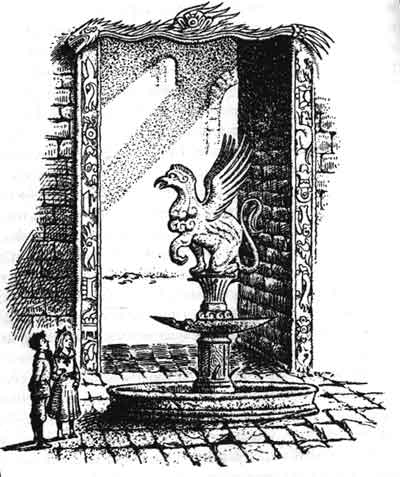
The light from the setting sun was blood red on the trunks of the gum trees as I walked through Westerfolds Park this evening. The smoke from the bushfires is a feint haze in the air, but more than enough change the light to remind me of the old world of Charn, in C.S. Lewis' The Magician's Nephew
 , a book that I hadn't thought about for years.
Low down and near the horizon hung a great, red sun, far bigger than our sun. Digory felt at once that it was also older than ours: a sun near the end of its life, weary of looking down upon the world. To the left of the sun, and higher up, there was a single star, big and bright. Those were the only two things to be seen in the dark sky; they made a dismal group. And on the earth, in every direction, as far as the eye could reach, there spread a vast city in which there was no living thing to be seen. And all the temples, towers, palaces, pyramids, and bridges cast long, disastrous-looking shadows in the light of that whithered sun. Once a great river had flowed through the city, but the water had long since vanished, and it was now only a wide ditch of grey dust.There are rivers and lakes in this country that are little more than dust, thanks to the drought, and with a Prime Minister who is gung-ho for nuclear power, is it so strange to think of a world being destroyed by "magic"?
Monday, December 04, 2006
Brian Eno lecture
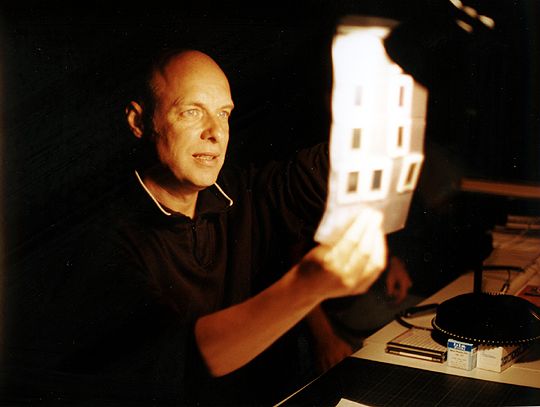
A couple of weeks ago, while I was up during the night suffering biological payback (why is it always that the women suffer while men get off scott free?), I distracted myself from my discomfort by listening to this lecture by Brian Eno, as part of the BBC's Free Thinking series. Brian Eno is a fascinating chap, and an excellent speaker, and this lecture prompted me to continue my musings about time, particularly in relation to his Long Now project.
Thursday, November 30, 2006
Existential crisis
Oh my! The bigger the project, the bigger existential downer afterwards!
The reason I haven't posted here for a long time is because I had my masters recital last night. This was one hour of music that I have been focussing on since February - it is as though the whole year's work was distilled into that one event. The focus was intense, to say the least.
I find it really hard to evaluate my performance. There were a lot of things I was very pleased with, and also quite a few moments I was distinctly not pleased with. But I realised a few days ago that I never really believed that I could actually get up there and do it, so the very fact that I did it is excellent!
I had it recorded, and it will be interesting to listen back to the recording, and see how it sounded from the outside. Often I find, when listening back to recorded performances, that mistakes and glitches that seemed massive from the perspective of the performer actually are barely noticable, while other things that I was hardly aware of at the time stick out like sore thumbs.
But it's all in the past now.
And I'm facing a sink full of unwashed dishes and a desk full of unpaid bills. Welcome back to normality!
Thursday, November 16, 2006
Sparkling shiraz
Life is full of meetings and partings. Some last for a lifetime, some for only a few hours. The length of time does not reflect the significance of the encounter. A moment shared between two people. A memory held for life. A smile, a glance, a kiss. They won’t be forgotten. The heart holds more than photographs.
Is a bittersweet parting at the airport better than a messy domestic break up in a year’s time? Or is it the safe option?
(and by the way, Tasmania was beautiful)
Is a bittersweet parting at the airport better than a messy domestic break up in a year’s time? Or is it the safe option?
(and by the way, Tasmania was beautiful)
Tuesday, November 07, 2006
Heading South
I'm off to Tasmania for a few days. I feel I may not be quite the same person when I return. I'll let you know...
Saturday, November 04, 2006
Saturday morning in Eltham
The sun was shining, but it's not any more. The air is sweet, though, and I have my front door open. I am hibernating this weekend. Today is the first day for a month that I haven't had to drive into the city, and I plan to make the most of it.
I am listening to
 and drinking organic orange juice, which is one of the best things eva :)
The plan for today is to practice, write, read, rest...
There is one phrase from a book I am reading which for some reason won't leave me alone: "every heart has secrets is dares not tell". I am not quite at peace with my life just now, there is a niggling feeling in my heart... but there's nothing I can do about it now, so it may just have to lie there for a while longer.
I am listening to
 and drinking organic orange juice, which is one of the best things eva :)
The plan for today is to practice, write, read, rest...
There is one phrase from a book
I am reading which for some reason won't leave me alone: "every heart has secrets is dares not tell". I am not quite at peace with my life just now, there is a niggling feeling in my heart... but there's nothing I can do about it now, so it may just have to lie there for a while longer.
Thursday, November 02, 2006
What is Practice? Part 5...
Hello, My Name is Practice
I am planned and disciplined, spontaneous and creative.
I marry emotion and reason, technique and expression.
I am focus and imagination, work and play.
Sometimes I like to repeat things over and over again, listening for small changes each time. I gain insight through mantra.
Sometimes I like to perform for myself with abandon, not caring about wrong notes, but feeling the sweep of the music carry me away.
I can be a microscope, investigating the smallest detail of a trill, or a giant telescope, linking the constellations of movements, keys and themes.
I can lose myself in intricate detail and discover infinity in a simple melody.
My heart moves within and without time, capable of stretching split seconds into eternity, as well as beating crotchets at exactly 84 beats per minute.
I am deep stillness in contemplation, dancing movement, perseverance through frustration.
I listen, I feel, I touch, I remember, I discover, I am, I do.
I am a way of life, a meditation, a path of growth.
I am a musician’s personal liturgy.
Wednesday, November 01, 2006
Sci-Fi Soviet Architecture
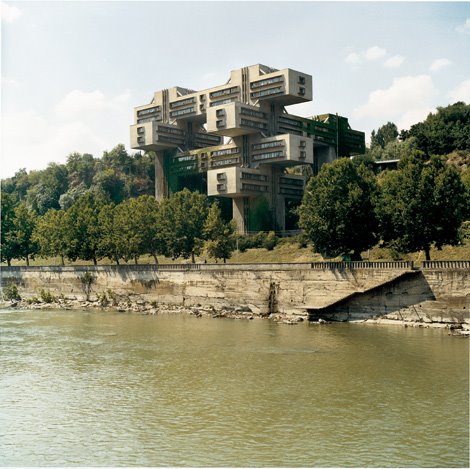
My new favourite place on the web, PingMag, has some photos by Frederic Chaubin of strange and wonderful buildings in what used to be the USSR. I want to know what they look like inside!
Sunday, October 29, 2006
What is Practice? Part 4 - Going Deeper
(Part 1)
(Part 2)
(Part 3)
The history of the word practice is quite interesting. The earliest recorded use in English was in 1392, when it meant "to do, act, or perform habitually." This came, via Old French, from Middle Latin practicare, meaning "to do, perform.” Here there is nothing about the purpose of acquiring a skill or proficiency. These earlier forms of the word are all about doing.
I started to think about the practice of a musical instrument in these terms.
What if practice was about doing? If the doing was the important part of the practice? What if the impending performance was not the supreme goal of the practice, it was merely a by-product? How does practice affect us as people, not just performance machines? Could I be a music practitioner, rather than a performer?
The word practice is used today not only in the context of music. It is often used when talking about spirituality, meditation and religion. If I practice meditation, how is that different to practicing my instrument? Could practicing my instrument become less like a chore and more like the practice of a belief-system? Something that flows through the whole of my life?
How well can I get to know a single note? How deeply can I inhabit the silence of a rest? How far can I stretch the space between two semiquavers?
Can I approach my practice with compassion, without judgement or guilt? Can I enjoy the journey without an obsessive need to arrive?
Could I view practice not as something that separates and isolates me from the world, but as something that connects me to a deep current of humanity?
Now I really have no answers to these questions, and I don’t really know if it is possible. Maybe this is all a bit way-out. But I am starting to formulate a picture in my mind’s eye of a possible practice…
This is a deep practice, working with vertical time, rather than horizontal time. There is no clock-watching.
This practice is about really knowing the music, getting completely settled with the material, and with myself.
This practice approaches the instrument with interest, and really listens to the sounds. There is awareness, rather than judgement.
This practice is a whole attitude to life. It is a lifestyle, encompassing much more than technique or even musicality.
It is a doing that involves aesthetics and philosophy, emotion, reason and soul. It affects not only the music but life itself.
* * *
If this practice could talk, maybe it would say…
...to be continued...
Thursday, October 26, 2006
Post-show blues
Oh, how I hate the day after. The day after the big gig, the day after the show ends, the day after it is all over and life threatens to go back to grey normality. Why is it always at this time that the question of my future and what I am to do with it looms large?
Tuesday, October 24, 2006
What is Practice? Part 3 - On the surface – Practice as Preparation for Performance
(Part 1)
(Part 2)
Certainly much of our practice is geared towards acquiring skill or proficiency. There is a certain level of technical ability required to play a musical instrument, and we need to be able to play the right notes at the right pitch at the right speed.
To gain this technical proficiency, we “play… things that nobody would want to listen to. This might include scales, arpeggios, extended tones…, and various technical patterns.” As Chad Fowler remarks:
I would certainly never record them and release them on a CD. I wouldn't even bore anyone with these sounds unless they either lived in my house and had no choice or were being paid to listen to them and offer suggestions for improvement.
But we don’t want to acquire technical skill just for the sake of having technical skill. No, we want to perform for an audience. So practice could also be defined as the preparation for performance. Private, isolated practice in preparation for public performance.
So we practice our pieces, work on the fingering for a particular passage, play those bars over and over again until we cannot possibly make a mistake. We analyse the harmony, and impart meaning into the melody. We turn the piece of music inside out and find out how it was put together, so we can re-create it in our own interpretation. We try to get under the skin of the music, to feel its emotions as our own.
This process of preparing for performance takes time, patience, discipline, and often seems like a lot of hard work. But the goal is in sight – that big recital. Wow, won’t it be great to have achieved that! All this hard work will have been worth it!
But what happens when that big recital has been? Our practice is not at an end. We still have to turn up at the instrument the next day, continuing to hone our technique and learning the music for the next gig. Just like the proverbial housework, practice is never really done.
In our practice we are constantly striving towards some future date, focussed on a target that keeps moving as our goals grow and shift. We are never satisfied because what we are working for is never now. It is always somewhere in the future.
Practice can be very easily seen as merely the means to an end, the road by which we arrive at our real goals as musicians – performance. Because, after all, we’re performers, not practicers, aren’t we?
Thursday, October 19, 2006
What is Practice? Part 2 - As Described by Others
(part 1 of What is Practice? is here)
When I questioned music students about what they thought practice was, the answers included: “Torture”; “A process of trying to improve your technical skills”; “To work on something to attain a high standard or perfection. This involves an amount of repetition.”; “Repetition in the hope of getting it better.”; and “Working at getting something right – getting better at something.”
So far, these are not particularly positive descriptions. They involve work, repetition, slogging away at the instrument for some future glory.
When I looked up the dictionary, I found that practice could be “a habitual or customary performance”, “a habit or custom”, “repeated performance or systematic exercise for the purpose of acquiring skill or proficiency”, “skill gained by experience or exercise”, or “the action or process of performing or doing something” .
It is the third of these definitions that many, if not most, music students, and certainly myself, generally associate with the idea of practicing our instruments: “repeated performance or systematic exercise for the purpose of acquiring skill or proficiency.”
Wednesday, October 18, 2006
We set the fire alarm off!
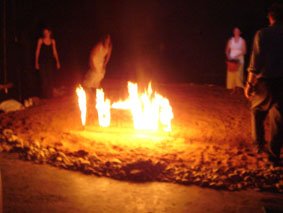 Last night, in our dress rehearsal, all was going to plan: Margie was lighting the burning town, it was looking fabulous. Then whoop-whoop-beep-beep-beep "please evacuate the space now, and make your way to the assembly point outside..."
The smoke alarms in the venue had been isolated, but not the ones in the School of Art ceramic studio next door. And the smoke travelled through the vents in the walls...
I think the audience thought it was part of the show! Luckily it was a balmy evening, and the bar next door was open, so we sat outside with a beer for a while, waiting for the firemen to tell us it was safe to go back in!
Subscribe to:
Posts (Atom)


